Heidi Hakimi-Hood
Tuesday, 10 February 2026
Since childhood, I have been under the impression that I am what I do. I come from a long line of workaholics, and my family has always drawn our identity from our jobs. We devote little time for hobbies, joy, and relaxation. We are workers – and we are proud of it. We miss parties, family gatherings, and holiday celebrations for work. ‘I can’t, I have to work’ has been a long-standing generational mantra. When we’re not at work, we feel lonely, unloved, and void of meaning. Once the trauma of 2020 took hold, however, I decided to try to put an end to my work-is-everything lifestyle. My faith is stronger because of my decision.
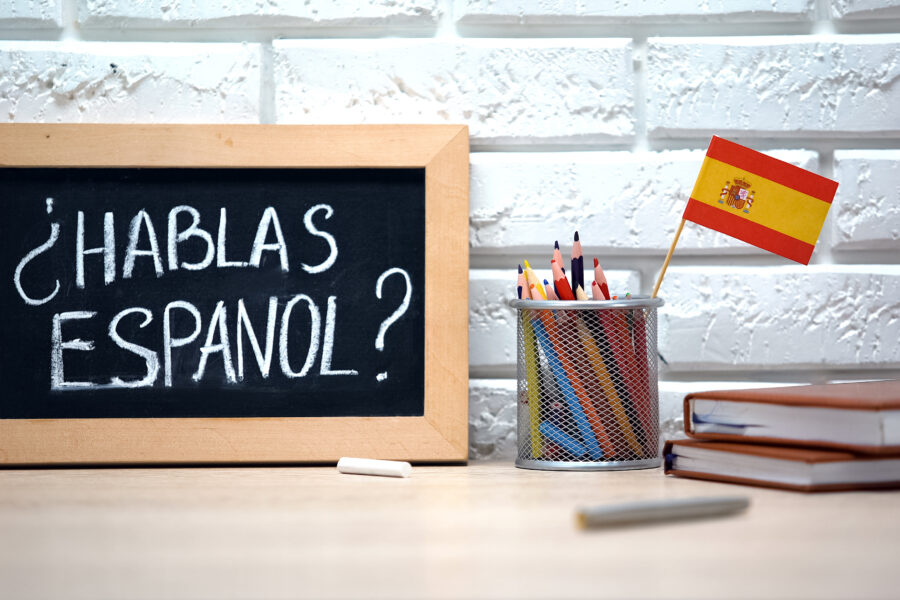
Without faith, my work is impossible. I am a high school Spanish teacher in America.
My teaching career began in 1998. It stopped in 2000. Stress, anxiety, and inexperience overwhelmed me. I simply could not manage my students’ social and emotional needs on my own. Back then, I was a new teacher in my early twenties. I wore my heart on my sleeve. Per administrative guidance, teachers were told not to smile until Christmas. In short, I masqueraded as a personality-free educator. My faith wavered. How could God want me to be a teacher? I hated every minute of my job – I was struggling at a struggling school. My family insisted I keep going to work. The first year was a challenge I hope I never have to relive.
In spite of my attempts to keep my students at arms’ length, they made their way to me after school to share about their lives. They invited me to their athletic events, orchestra performances, and various choir concerts. I was asked to serve as a Spanish Club sponsor. Building relationships with the students was my strong suit, and I was grateful they appreciated my support. However, one student devastated me when he shared with me how his girlfriend miscarried a pregnancy after she was punched repeatedly in the stomach – a gang fight, perhaps an initiation. He didn’t really know. I referred him to a school counsellor. I read the book of Philippians that night. The story still haunts me, and I continue to read Philippians in times of duress. Later that same school year, fallout from a student’s murder trial, threatening behaviours, and inadequate physical and mental health support consumed every ounce of courage I had left to teach. My mother found me on the bathroom floor one morning. I was in the fetal position, my stomach in knots. I was too afraid to go to work. Once my contract ended, I left my job. I had absolutely no desire to return.
Little did I know, many new teachers left the profession that year. I felt guilty for leaving. I had failed myself and my family. We were not meant to be quitters. We stayed the course, no matter how difficult. As a high school teacher, I was punching above my emotional weight, and I knew it. My self-awareness was perceived as a weakness. I just needed a stiff upper lip and a stronger constitution. But I didn’t have either of those things. In addition to finding a new way to make a living, I needed a new way to live.
After I resigned from my position, I pursued a master’s degree in Romance Languages. Friends and family thought I was crazy. Out of concern, folks would tell me, ‘You’ll never get a job with that!’ or ‘What are you going to do with a useless degree?’ I disregarded their advice. I moved to a new city, and I obtained my degree. I lived in a cheap apartment, and I made friends with similar interests. I met Jeff, my future spouse. I taught university students for a few years, studied in Spain, and I realized I was a good teacher. I knew my subject matter, and I had a great rapport with my adult students. My faith also grew. And I still read Philippians.
Now, about 1 in 5 American teachers leave the job within the first three years of teaching. Surprisingly, I have gone back to the secondary-level classroom. Folks continue to think I’ve lost my mind. I am now in my 7th year of teaching high school. The challenges are still present, but I am stronger. I say ‘no’ when asked to do extra duties that will interfere with family and wellness times. I smile whenever I wish, and my students notice how ‘positive and happy’ I am. I make time for my family, for exercise, and for reading. I unashamedly ask for help when I need it, and I have cultivated a community of fellow educators who support one another. Our school has 1,800+ students. We frequently have legally mandated lockdown, lockout, tornado, and fire drills. These events always bring to mind that school violence is culturally embedded. However, school peace is still possible. On stressful days, I still have calmness of mind and heart because of my faith.
My job can be painfully stressful; but I know how to manage the stress through friendship, prayer, and surrounding myself with solid emotional support systems, rooted in a shared faith. It is no small thing to be entrusted with my community’s young adults. The social pressures they face are terrifying. I let them know I care. I live my faith each day as I am able. I fail. I succeed. I teach. I am weak. And I am strong.
My new life mantra is grounded in faith – not fear or work. It is not of my own making. It is Philippians 1:20. I have revised the verse in my own words: ‘No matter what might happen today, I go forward with the confidence to know that I can demonstrate how strong Jesus is, through my teaching, through my living, and even in my dying. Every action I take must be about him’.
Dr Heidi Hakimi-Hood is a high school Spanish teacher in Texas and earned her PhD in English at Texas Christian University. She finds great joy in writing, eating cheese, and spending time with her pack, Jeff, Bannock and Shortbread.
Featured image credit: iStock

Want more thoughtful public theology? Follow us on Facebook and subscribe to Engage.Mail, Zadok and Equip.